Modern Nomads
Tap the calamus image below to get free access to our best collection of stories for children with related activities. Download it to enjoy our stories whenever you want
Advertisement
 Where to start? Download our free Workbook of Values, watch our animated stories and enjoy Jakhu Stories, our stories for kids app
Values
- Respect for Nature and Sustainability
Main Lesson
It is up to us to live in a sustainable worldSetting
A class in an everyday schoolCharacters
A teacher and his pupilsBelow you'll find the story text and a link to download it. Use it to improve the emotional and cognitive development of your children or your baby and enhance your parenting skills


Modern Nomads
Get these stories


Story
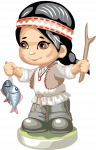
One day, Mister Arnold was teaching a lesson, and things were going as normally as ever. He was explaining the story of mankind to his pupils. He told them that, in the beginning, men were nomads; that they never stayed in the same place for very long. Instead, they would travel about, here and there, in search of food, wherever it was to be found. And when the food ran out, they would move off somewhere else.
He taught them about the invention of farming and keeping animals. This was an important discovery, because by learning to cultivate the land, and care for animals, mankind would always have food readily available. It also meant that people could remain living in one place, and this made it easier to set about tasks that would take a long while to complete, like building towns, cities, and all that was in them. All the children were listening, spellbound by this story, until Lucy jumped up:
"And if that was so important, and improved everything so much, why are we nomads all over again, Mister Arnold?"
Mister Arnold didn't know what to say. Lucy was a very intelligent girl. He knew that she lived with her parents in a house, so she must know that her family were not nomads; so what did she mean?
"We have all become nomads again," continued Lucy, “The other day, outside the city, they were cutting the forest down. A while ago a fisherman told me how they fish. It's the same with everyone: when there's no more forest left the foresters go elsewhere, and when the fish run out the fishermen move on. That's what the nomads did, isn't it?"
The teacher nodded, thoughtfully. Really, Lucy was right. Mankind had turned into nomads. Instead of looking after the land in a way that we could be sure it would keep supplying our needs, we kept exploiting it until the land was bare and barren. And then off we would go to the next place! The class spent the rest of the afternoon talking about what they could do to demonstrate how to be more civilised...
The next day everyone attended class wearing a green t-shirt, with a message that said "I am not a nomad!"
And, from then on, they set about showing that indeed they were not. Every time they knew they needed something, they made sure that they would get it using care and restraint. If they needed wood or paper, they would ensure that they got the recycled kind. They ordered their fish from fish farms, making sure that the fish they received were not too young and too small. They only used animals that were well cared for, and brought up on farms...
And so, from their little town, those children managed to give up being nomads again, just as prehistoric men had done, so many thousands of years ago.
Did you like this story?
Yes
No
Topics in this story
Other even shorter stories


Other versions and options for this story



( fortunately, sending them has no cost for us )
Would you rather look for stories, values and characters? You can do so using links below
search our tales collection


 receive a message with new stories and articles directly at your inbox
ECRP, Early Childhood Research & Practice is an excellent resource with articles for parents and teachers willing to investigate in the latest techniques and discoveries about early childhood education
Child & Family Web Guide is one of the best parenting resources directory
A short Christmas story about humility

A short love story
A short story about Halloween
A short story about Halloween

A story to learn everyone deserves respect and help